Portuguese Rococo Imperial Topaz and Enamel Flower Brooch, circa 1760–1770
A beautiful 18th-century Portuguese Rococo flower jewel, set with seventeen imperial topazes and green enamel in silver.
Originally made as a hair jewel in the 1760s–1770s, it was later converted into a brooch, as happened with many surviving Portuguese flower jewels as fashions changed.
The flower is centered by a single topaz and surrounded by eight petals, each made from two stones: one trapezoidal-cut topaz and one triangular-cut topaz. Eight green enamel leaves are arranged between the petals, giving the piece a wonderful contrast of rich golden color and vivid green.
The topazes are foil-backed, a traditional 18th-century technique used to enhance their color and brilliance and to catch the light beautifully. The stones were mined in the Minas Gerais region of Brazil, which was an important source of the colored gemstones used in Portuguese jewelry during this period.
A very similar Portuguese example combining topaz and green enamel is illustrated in “Gonçalo de Vasconcelos e Sousa, A Joalharia em Portugal, 1750–1825”, p. 70. Similar Portuguese floral jewels are also illustrated on p. 175 of “Georgian Jewellery”.
Silver, imperial topaz, and green enamel
Circa 1760–1770
Portugal
Approximately 3 cm diameter
12.5 grams
Portuguese Rococo Imperial Topaz and Enamel Flower Brooch, circa 1760–1770
A beautiful 18th-century Portuguese Rococo flower jewel, set with seventeen imperial topazes and green enamel in silver.
Originally made as a hair jewel in the 1760s–1770s, it was later converted into a brooch, as happened with many surviving Portuguese flower jewels as fashions changed.
The flower is centered by a single topaz and surrounded by eight petals, each made from two stones: one trapezoidal-cut topaz and one triangular-cut topaz. Eight green enamel leaves are arranged between the petals, giving the piece a wonderful contrast of rich golden color and vivid green.
The topazes are foil-backed, a traditional 18th-century technique used to enhance their color and brilliance and to catch the light beautifully. The stones were mined in the Minas Gerais region of Brazil, which was an important source of the colored gemstones used in Portuguese jewelry during this period.
A very similar Portuguese example combining topaz and green enamel is illustrated in “Gonçalo de Vasconcelos e Sousa, A Joalharia em Portugal, 1750–1825”, p. 70. Similar Portuguese floral jewels are also illustrated on p. 175 of “Georgian Jewellery”.
Silver, imperial topaz, and green enamel
Circa 1760–1770
Portugal
Approximately 3 cm diameter
12.5 grams
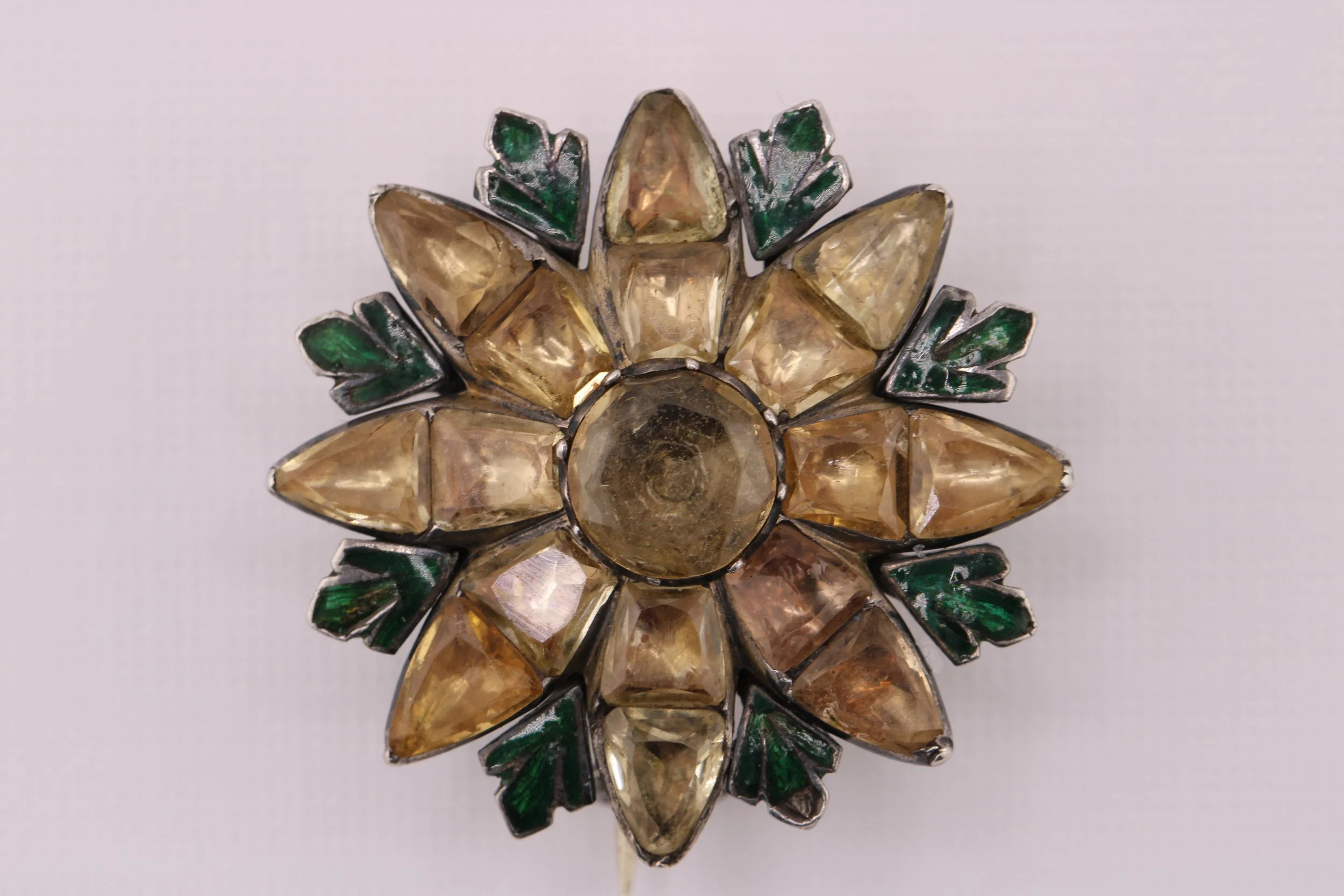 Image 1 of 7
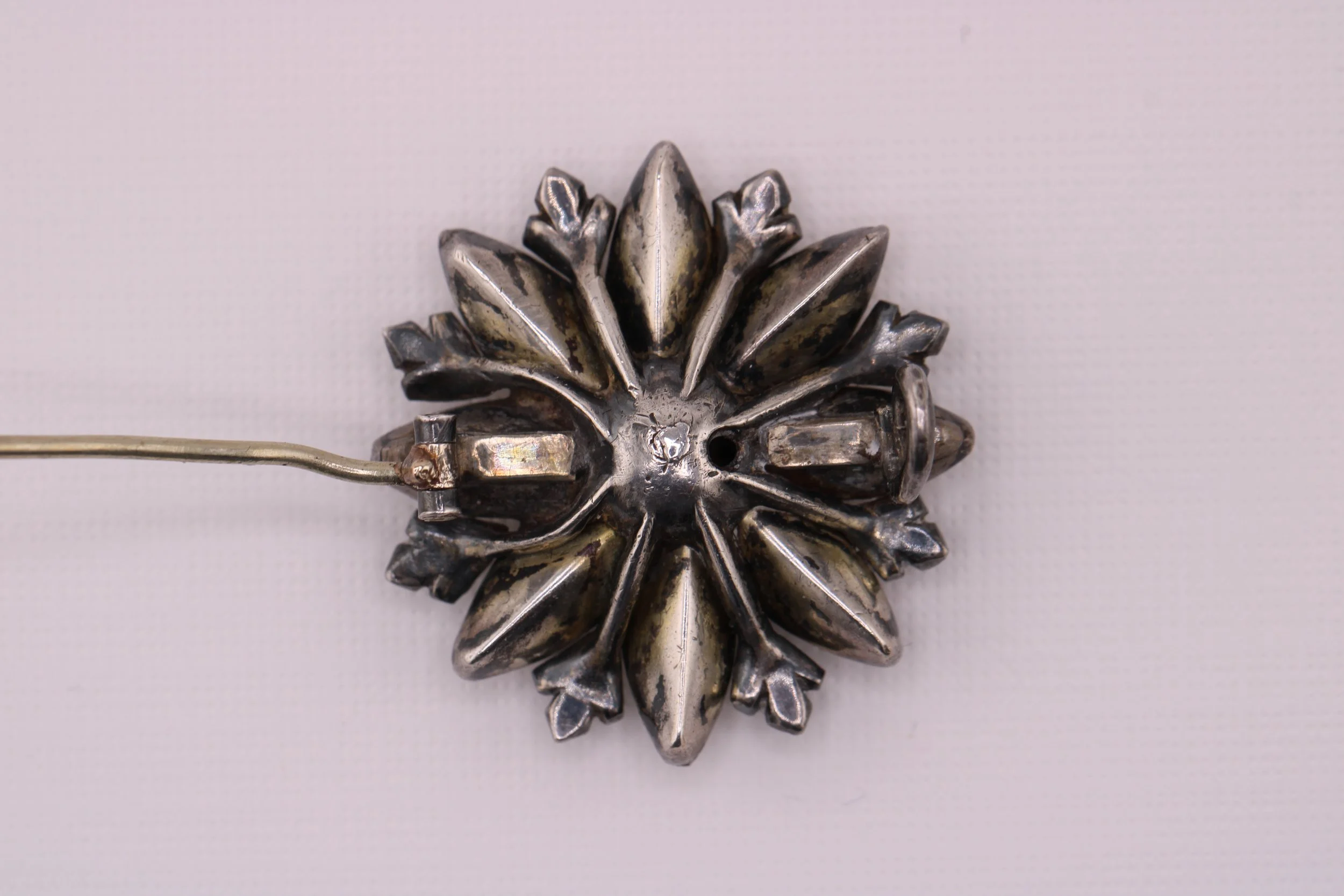 Image 2 of 7
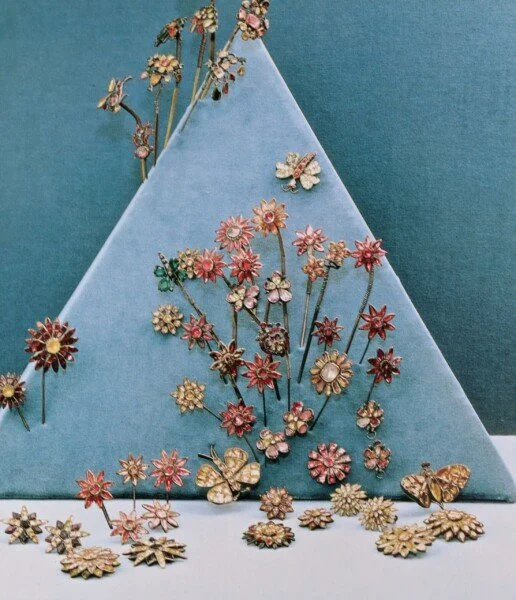 Image 3 of 7
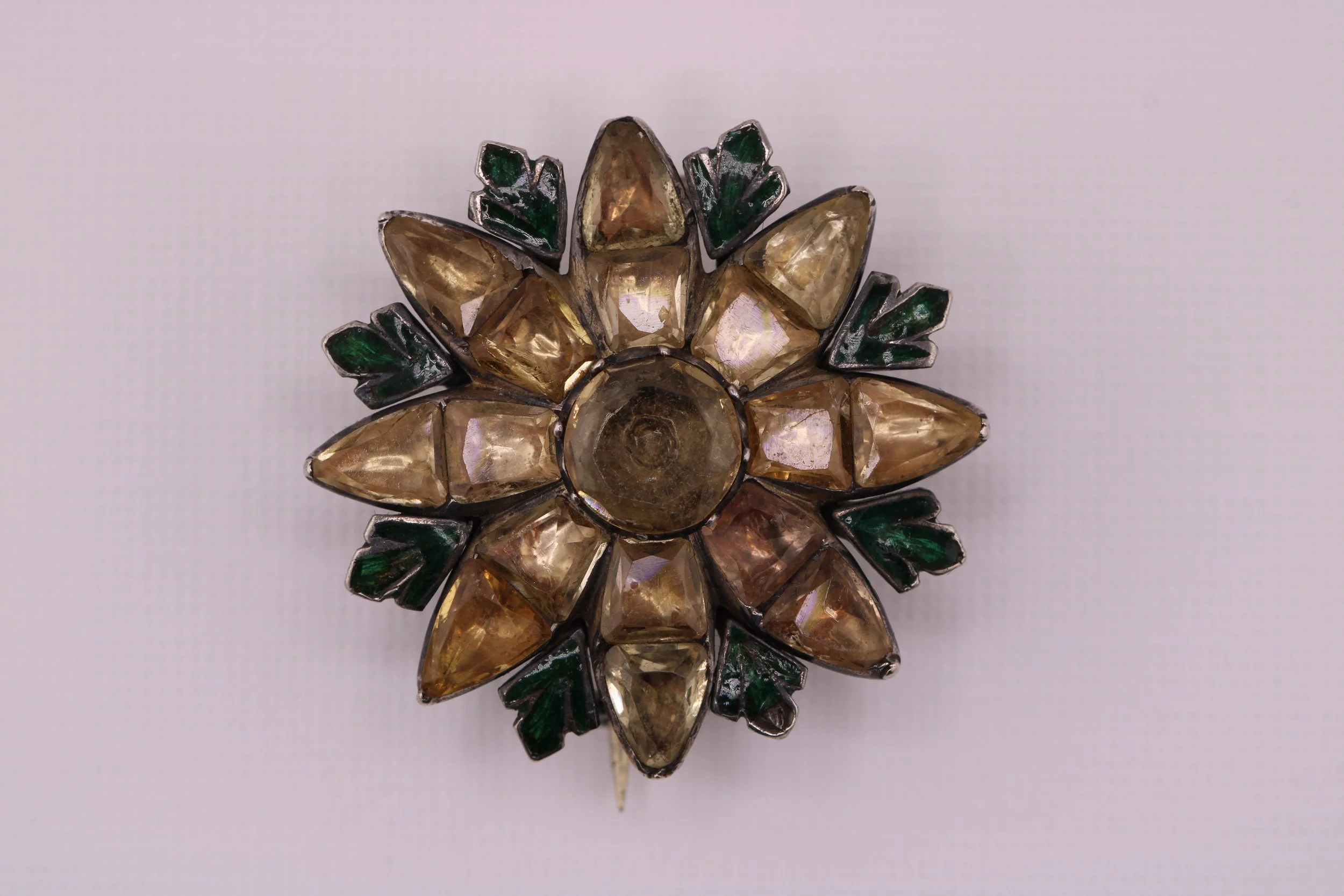 Image 4 of 7
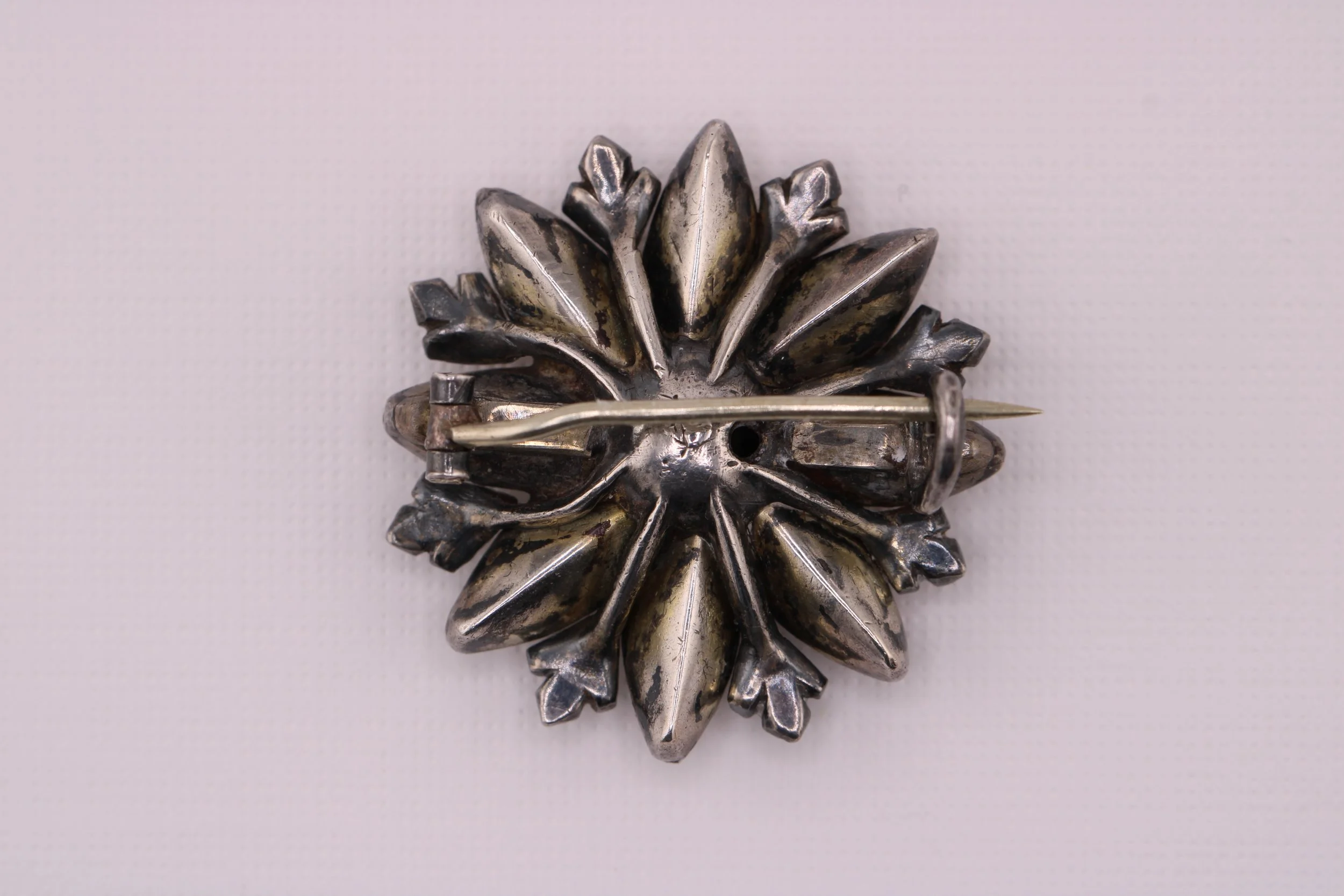 Image 6 of 7
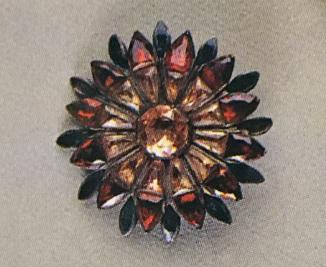 Image 7 of 7