 Image 1 of 3
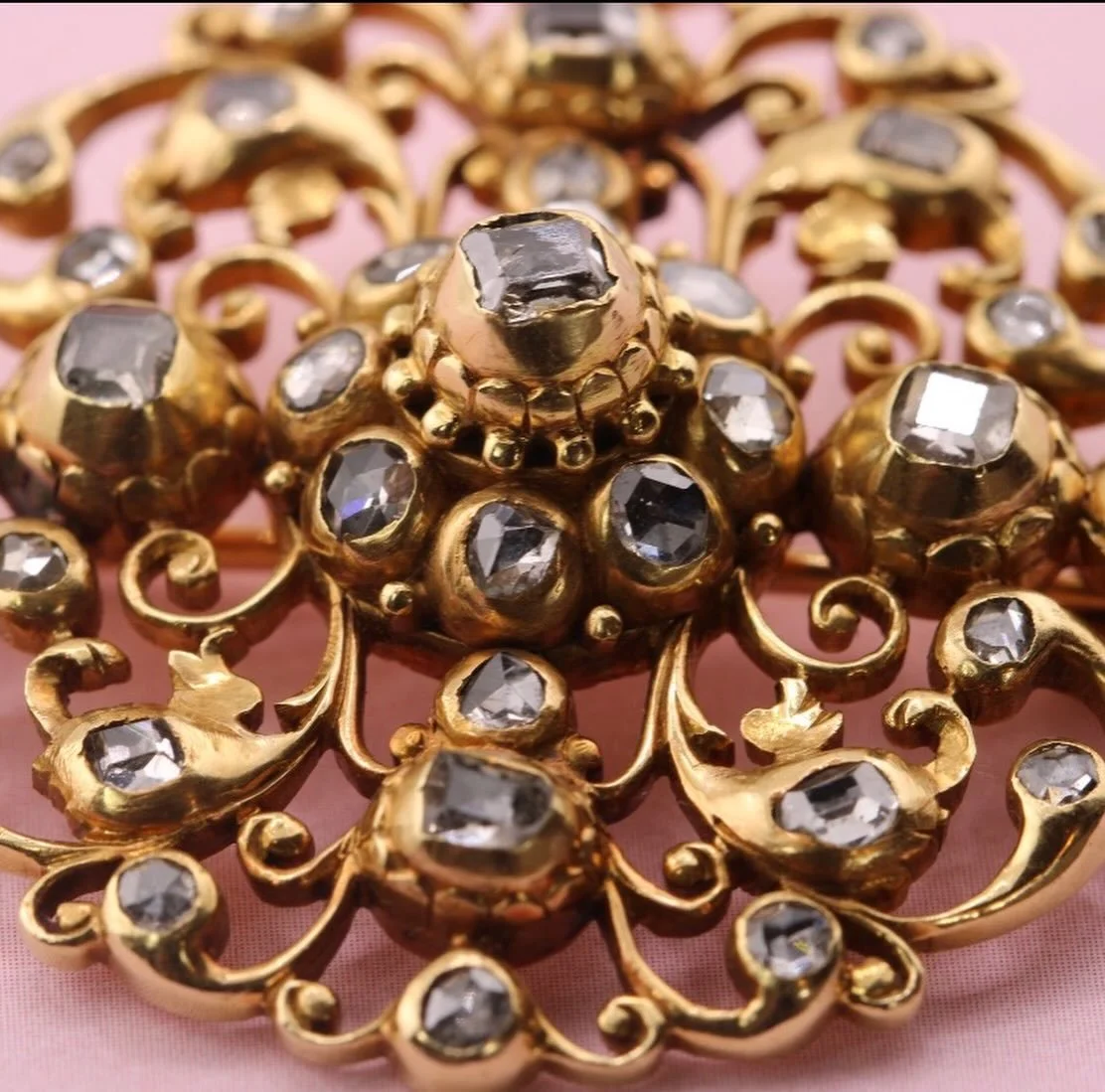 Image 2 of 3
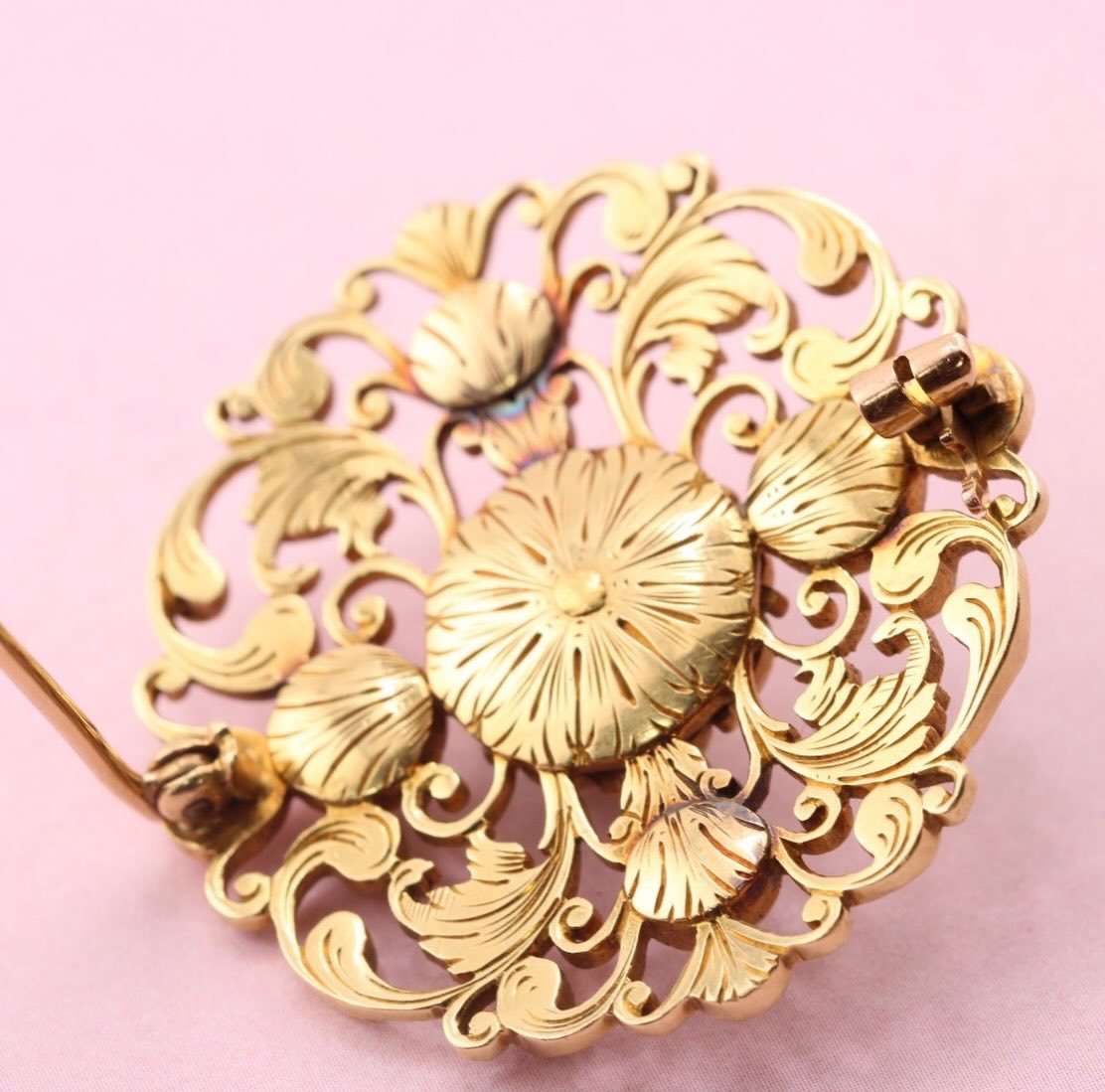 Image 3 of 3
Western European / Iberian
Circa 1680–1700
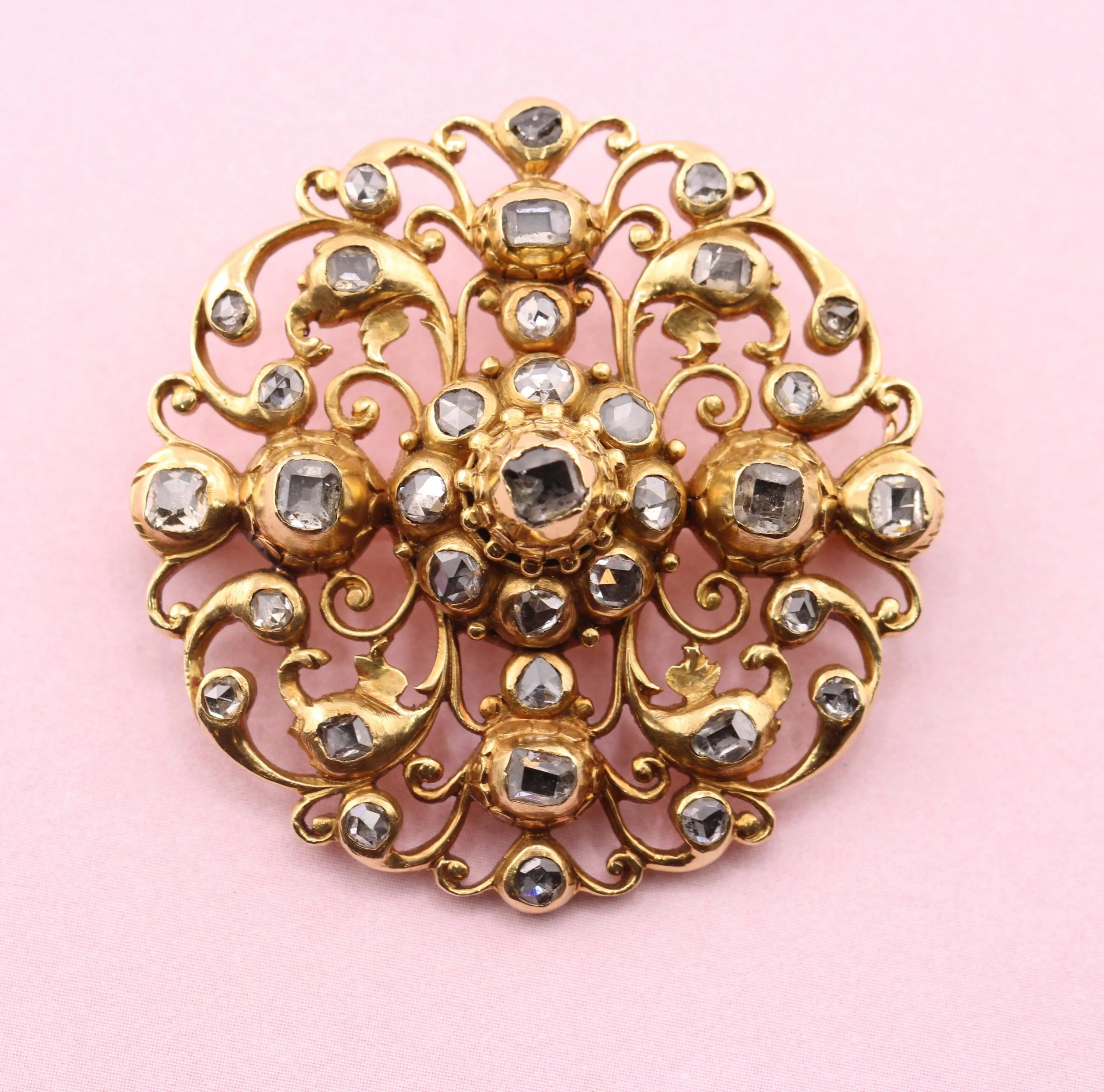
This exceptional Western European diamond brooch, worn as a dress jewel, dates to the late 17th century, circa 1680–1700, and exemplifies refined late‑Baroque goldsmithing at the threshold of the Rococo. Executed in high‑karat gold (over 18kt), the brooch is set throughout with a mixture of 35 diamonds, comprising late table‑cut and early rose‑cut stones, all mounted in fine rub‑over collets with boxed bezels - hallmarks of elite European workshops of the period.
The brooch is organized as a clustered composition, a format widely favored in late‑Baroque dress jewelry, in which diamonds were arranged in symmetrical, radial groupings around a central focal point. The design is articulated along the cardinal axes, with four principal diamonds placed north, south, east, and west. These stones are distinguished by their classical pie‑crust edging, a deeply scalloped surround characteristic of late‑17th‑century workmanship and strongly associated with Western European goldsmithing traditions of the period, including those of the Iberian Peninsula.
The diamonds display a notably watery, silvery appearance, consistent with early Indian sources that continued to supply Europe well into the late 17th century. The presence of both late table‑cut and early rose‑cut diamonds within the same jewel reflects normal workshop practice around 1700, when earlier cuts remained in circulation and were frequently set alongside rose cuts as diamond‑cutting techniques evolved.
The overall design is animated by lively rocaille scrollwork, with fluid, curling turns that anticipate the Rococo while retaining Baroque symmetry. These elegant gold forms create a sense of movement and visual richness, enhancing the play of light across the diamond surfaces and reinforcing the jewel’s intended impact in candlelit settings.
High carat gold and diamond
3.7cm
center table cut diamond, approximately 3.0mm by 3.14mm
Western European / Iberian
Circa 1680–1700
This exceptional Western European diamond brooch, worn as a dress jewel, dates to the late 17th century, circa 1680–1700, and exemplifies refined late‑Baroque goldsmithing at the threshold of the Rococo. Executed in high‑karat gold (over 18kt), the brooch is set throughout with a mixture of 35 diamonds, comprising late table‑cut and early rose‑cut stones, all mounted in fine rub‑over collets with boxed bezels - hallmarks of elite European workshops of the period.
The brooch is organized as a clustered composition, a format widely favored in late‑Baroque dress jewelry, in which diamonds were arranged in symmetrical, radial groupings around a central focal point. The design is articulated along the cardinal axes, with four principal diamonds placed north, south, east, and west. These stones are distinguished by their classical pie‑crust edging, a deeply scalloped surround characteristic of late‑17th‑century workmanship and strongly associated with Western European goldsmithing traditions of the period, including those of the Iberian Peninsula.
The diamonds display a notably watery, silvery appearance, consistent with early Indian sources that continued to supply Europe well into the late 17th century. The presence of both late table‑cut and early rose‑cut diamonds within the same jewel reflects normal workshop practice around 1700, when earlier cuts remained in circulation and were frequently set alongside rose cuts as diamond‑cutting techniques evolved.
The overall design is animated by lively rocaille scrollwork, with fluid, curling turns that anticipate the Rococo while retaining Baroque symmetry. These elegant gold forms create a sense of movement and visual richness, enhancing the play of light across the diamond surfaces and reinforcing the jewel’s intended impact in candlelit settings.
High carat gold and diamond
3.7cm
center table cut diamond, approximately 3.0mm by 3.14mm